Obstetric Fistula 

The obstacles on Genet’s path to healing 

May 07, 2026
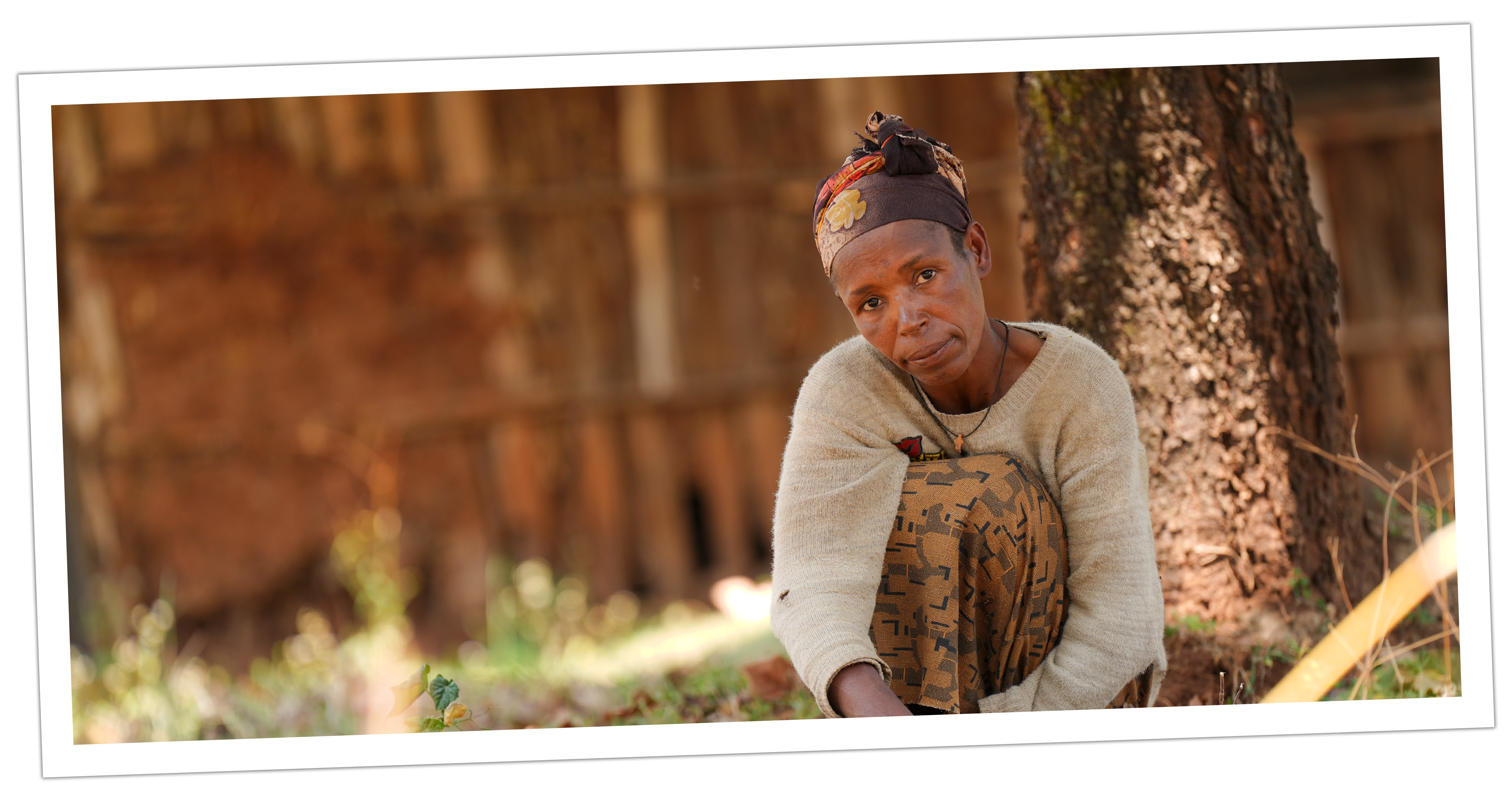
Seventeen years of pain, frustration and uncertainty.

For Genet, this was daily life after suffering an obstetric fistula. She felt she had no other choice but to live with the devastation it caused.

Genet says: "The health problem I have faced has ruined my life. I have never been happy. I constantly worry about what my future will be with this problem. I feel frustrated deep inside."

Obstetric fistula is both preventable and treatable. Why, then, are so many Ethiopian women still at risk of this terrible condition, and unable to access the treatment they need?

For women like Genet, the path to healing is often blocked by three major obstacles: access to healthcare, limited awareness of healthcare, and rural poverty.

3. Rural poverty

Almost 40% of Ethiopia’s population lives below the International Poverty Line of $3 a day, according to World Bank data. Recurring droughts, conflict and forced displacement, as well as a lack of basic services, mean conditions are even more difficult for rural families.  

Even where healthcare services might be reachable, many families do not have the income to cover the costs of travel. In some villages, a day’s walk is necessary before even reaching a road, an impossible journey for a woman in the last stages of her pregnancy.

Other women may have heard about possible cures but believe the costs of treatment will put it out of their reach.

They may also worry about caregiving duties for other children in the family. As sole breadwinner for her elderly mother and daughter, this presented a serious challenge to Genet, initially making her reluctant to make the journey to hospital. 

Fortunately, a solution was found. Genet’s daughter accompanied her on the journey to Addis Ababa.

Genet said: "They took care of her while I was receiving treatment. She was given clothes, shoes — everything she needed. They even gave her lotion and a comb and did her hair. Thanks to them, I am truly happy."

1. Access to healthcare


With nearly 80% of people living in rural areas, access to healthcare in Ethiopia remains a major challenge—especially for women in need of safe delivery services.

According to the Ethiopian Ministry of Health, there are just over 400 hospitals to serve a population of over 135 million people. In comparison, Australia has around 700 public hospitals, plus hundreds of private institutions, for fewer than 28 million people.

While there are an estimated 15,000 health posts – small, basic clinics – scattered across the country, these are often under-staffed and under-resourced. It is not unusual for just two extension workers at a rural health post to be responsible for more than 5,000 people. 

As a result, around half of all Ethiopian women give birth without the assistance of a trained midwife or healthcare professional. For many women, this is not a choice but their only option. As Genet describes: “When I became pregnant 17 years ago, I never visited a health facility. I didn’t have much information about pregnancy.”

For thousands of women in Ethiopia, giving birth means putting their lives, and the lives of their babies, at great risk. 

2. Limited healthcare awareness

Low levels of education, particularly in healthcare matters, can leave women unaware that the childbirth injuries they have experienced can be treated. 

In developed countries, governments can rely on television, radio and online platforms when distributing major healthcare education campaigns. In Ethiopia’s rural villages, these communication technologies are often unavailable. Local authorities may have to drive from one village to another, using loudspeakers to share important health messages, or host town square meetings.

It’s not surprising that Genet lived with her condition for almost two decades, not knowing that surgery could help restore her health and dignity.

Worse still, without an understanding of the complication and its causes, a woman is frequently blamed for her condition and subject to severe social stigma from those around her, who also lack knowledge. 

Genet felt this acutely: “I often go to church, but I don’t stay there long. I come back home and try to wash my clothes. I heard many things my neighbours said about me. It made me feel ashamed.”

Fortunately, Hamlin Fistula Ethiopia’s Patient Identification Officers, who travel across the country in search of women living with childbirth injuries, discovered Genet and referred her for free treatment. Without them, Genet may have lived with her condition forever.

3. Rural poverty

Almost 40% of Ethiopia’s population lives below the International Poverty Line of $3 a day, according to World Bank data. Recurring droughts, conflict and forced displacement, as well as a lack of basic services, mean conditions are even more difficult for rural families.  

Even where healthcare services might be reachable, many families do not have the income to cover the costs of travel. In some villages, a day’s walk is necessary before even reaching a road, an impossible journey for a woman in the last stages of her pregnancy.

Other women may have heard about possible cures but believe the costs of treatment will put it out of their reach.

They may also worry about caregiving duties for other children in the family. As sole breadwinner for her elderly mother and daughter, this presented a serious challenge to Genet, initially making her reluctant to make the journey to hospital. 

Fortunately, a solution was found. Genet’s daughter accompanied her on the journey to Addis Ababa.

Genet said: "They took care of her while I was receiving treatment. She was given clothes, shoes — everything she needed. They even gave her lotion and a comb and did her hair. Thanks to them, I am truly happy."

1. Access to healthcare


With nearly 80% of people living in rural areas, access to healthcare in Ethiopia remains a major challenge—especially for women in need of safe delivery services.

According to the Ethiopian Ministry of Health, there are just over 400 hospitals to serve a population of over 135 million people. In comparison, Australia has around 700 public hospitals, plus hundreds of private institutions, for fewer than 28 million people.

While there are an estimated 15,000 health posts – small, basic clinics – scattered across the country, these are often under-staffed and under-resourced. It is not unusual for just two extension workers at a rural health post to be responsible for more than 5,000 people. 

As a result, around half of all Ethiopian women give birth without the assistance of a trained midwife or healthcare professional. For many women, this is not a choice but their only option. As Genet describes: “When I became pregnant 17 years ago, I never visited a health facility. I didn’t have much information about pregnancy.”

For thousands of women in Ethiopia, giving birth means putting their lives, and the lives of their babies, at great risk. 

Finding solutions to better maternal care

At Hamlin Fistula Ethiopia, our goal is to overcome the many obstacles that prevent women from accessing skilled maternal healthcare. This includes:  

  • Free surgical treatment for women with childbirth injuries at one of Hamlin’s six hospitals.
  • The Hamlin College of Midwives, which is training a new generation of skilled healthcare professionals.
  • Patient Identification Officers who travel to remote areas to find women living with untreated fistula and refer them for free treatment, including transport support.
  • Resourcing rural clinics with essential medical supplies and equipment, and building new Maternity Waiting Homes where women from remote areas can stay before giving birth.

We believe every woman has the right to give birth safely, and every woman living with obstetric fistula deserves the chance to be found, treated and restored.

As we near the end of the financial year, your support can help find and heal another woman like Genet — ending years of suffering and giving her the chance to return home with dignity, health and hope. We hope you will consider donating today.

Thank you for your kindness and compassion.

Help us spread the word to end obstetric fistula
Instagram Icon
Facebook Icon
YouTube Icon
LinkedIn Icon
X Icon

Catherine Hamlin Fistula Foundation acknowledges the Traditional Owners and Elders past, present and emerging throughout Australia and the Gadigal people of the Eora Nation, the Traditional Owners of the land and waterways on which our Australian office is situated. We acknowledge the many ethnic groups in Ethiopia and their ancestral and cultural connection to the land where our work is undertaken.