New Life After Fistula: Abeba’s Story
January 27, 2026
After six years of isolation, Abeba found healing at Hamlin, leading to a supportive marriage and the joy of motherhood.
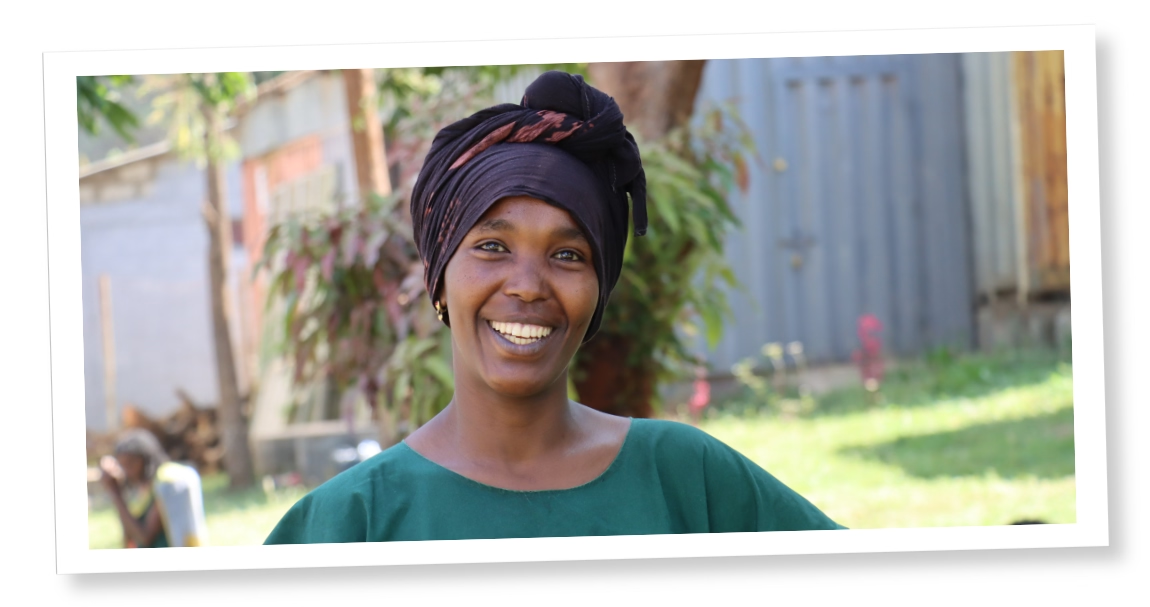
Abeba was born in the small village of Onago and now lives in Ethiopia’s Oromia region. She does not know her exact age. What she does know is the profound journey she has traveled - from unimaginable trauma and loss to healing, dignity and new life.
Soon after Abeba became pregnant she felt completely unprepared. With no health center in her village and no understanding of what childbirth involved, she received no antenatal care or advice about the risks of delivering her baby at home.
Her labor lasted four agonizing days. By the time her in-laws realized what a critical condition she was in and rushed her to hospital, it was too late to save her baby. When Abeba regained awareness, she realized her baby was stillborn and she could no longer control her urine or faeces. She had sustained a double obstetric fistula.
Six years of suffering
This was the start of years of physical suffering and deep emotional pain. Abeba’s husband abandoned her when he saw her condition. Shunned and ashamed, she was left isolated.
“For almost six years,” Abeba recalls, “I believed my life was over.”
Abeba’s father, now deceased, took her back into his care and eventually brought her to Hamlin’s Yirgalem Fistula Hospital for treatment. By the time she arrived, Abeba was unable to move, stand or walk. She was deeply depressed and had lost hope that her life could ever be restored.
At Yirgalem, Abeba received physiotherapy that slowly helped her sit and walk again. A colostomy was performed to manage her faecal incontinence, but her urinary fistula could not be repaired.
New life after fistula
A staff member at Yirgalem told her: “There can be a life after fistula” and referred Abeba to Hamlin’s Addis Ababa Fistula Hospital, which treats patients with complex injuries. She received multiple surgeries over the course of a year, but her fistula could not be repaired.
Abeba’s final option was diversion surgery and a permanent stoma. She questioned how she could live the rest of her life with a stoma bag, but with no other alternative, she agreed. Abeba describes the surgery as life-changing.
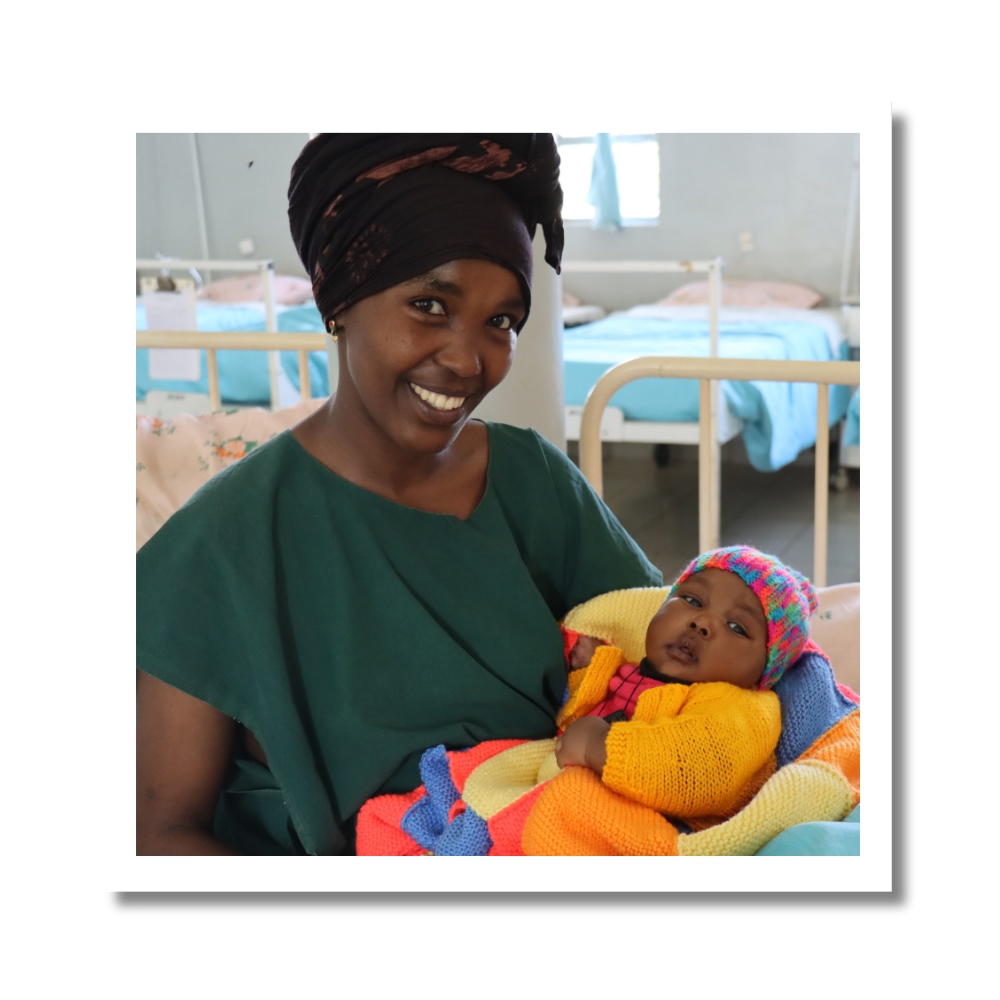

By God’s grace, everything turned out for the best. I now see that having the stoma bag was the right decision. I am incredibly thankful to God and Emaye (Mother, Dr. Catherine Hamlin) for helping me lead a peaceful life. Without her, I wouldn’t be where I am today.
- Abeba
Miracles happen!
With her health and dignity restored, Abeba chose to remarry. She was honest with her new husband about her medical history and her stoma. His response was one of acceptance and support.
Then, something extraordinary happened.
Abeba became pregnant - something she never believed possible. She went on to give birth to two healthy daughters, both safely delivered at Hamlin’s Addis Ababa Fistula Hospital. Today, her children are thriving, living proof of what compassionate care and skilled surgery can achieve.
Abeba is currently back at the Yirgalem fistula hospital for a six-month review and ongoing stoma management. She reflects on her journey with gratitude rather than sorrow.
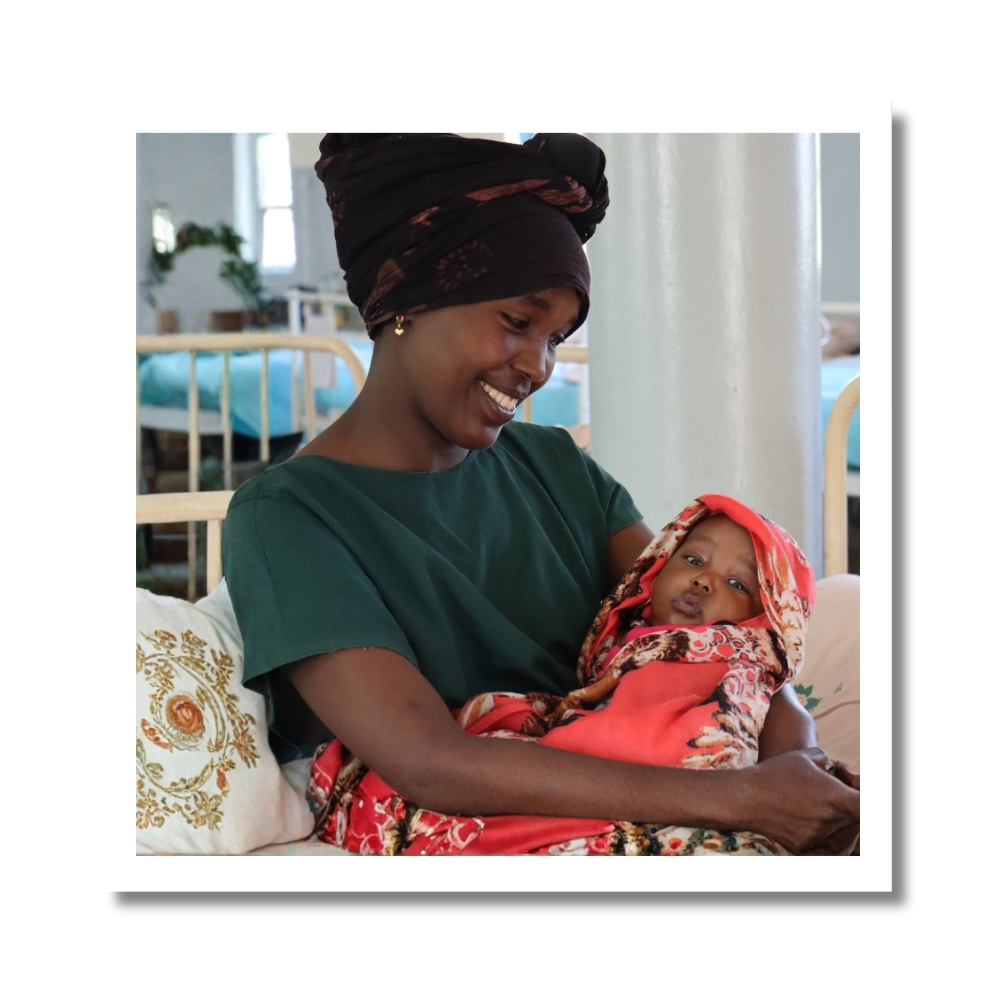
Words cannot express my thanks to everyone who helped me start life again. May God bless them all. And may Emaye rest in peace.
- Abeba
Abeba’s story is a powerful reminder that there can be life after obstetric fistula – an entirely preventable and treatable condition.
Thanks to the compassion, skill and vision of Dr Catherine Hamlin and the ongoing support of our donors, women like Abeba are finding healing, dignity and hope.
Click here to make a donation to help restore the life of another woman today.


Catherine Hamlin Fistula Foundation acknowledges the Traditional Owners and Elders past, present and emerging throughout Australia and the Gadigal people of the Eora Nation, the Traditional Owners of the land and waterways on which our Australian office is situated. We acknowledge the many ethnic groups in Ethiopia and their ancestral and cultural connection to the land where our work is undertaken.