Why fistula surgery changes far more than a woman’s health
May 26, 2026
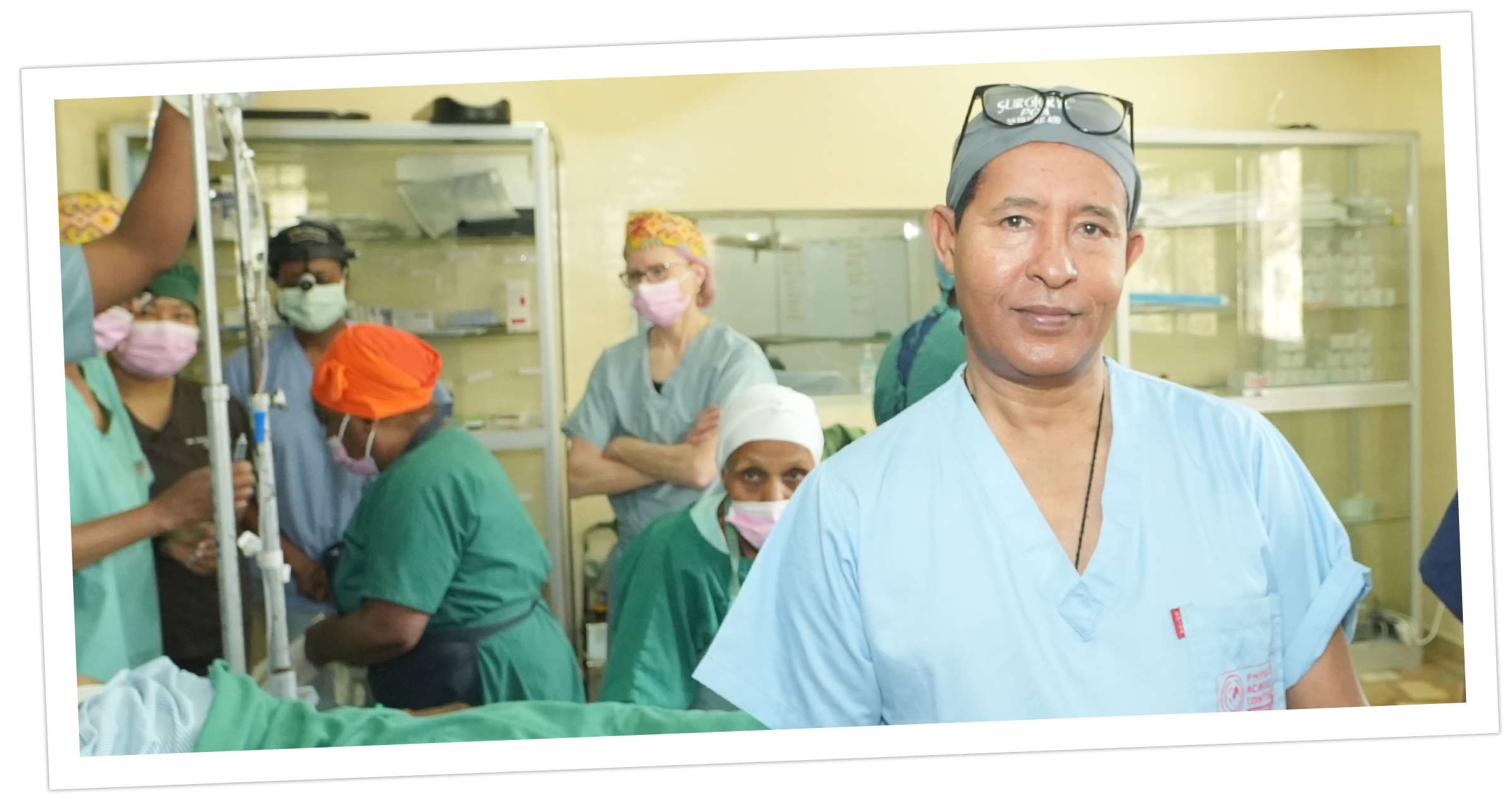
When a woman like Genet* undergoes surgery for obstetric fistula, the impact extends far beyond the operating theatre. Dr Bitew Abebe, FIGO-accredited fistula surgeon, obstetrician-gynecologist and uro-gynecologist at Hamlin’s Addis Ababa Fistula Hospital, explains why.
Obstetric fistula is a serious but highly treatable childbirth injury. It is usually caused by prolonged, obstructed labor, which creates a hole between the birth canal and the bladder or rectum. As a result, women experience continuous leakage of urine, feces or both, often alongside infection, physical pain and, in some cases, infertility.
Surgery can provide effective repair, giving women a real chance of full physical recovery. But the impact of finding women with historical fistula injuries and connecting them to treatment extends much further than the physical cure.

1. Preventing social isolation
Women with obstetric fistula are often stigmatized and, in some cases, abandoned by their husbands, families or communities. They may be excluded from community gatherings, religious life or work. Identifying and treating women with fistula helps support their reintegration into society, reducing marginalization, loneliness and poverty.

2. Regaining independence
It can be extremely difficult for women with obstetric fistula to work and earn a livelihood. This can make them more dependent on others at a time when they are already vulnerable. With their health restored, women are less likely to face poverty, neglect, or exploitation, and are better able to care for themselves, and their families.

3. Improving mental health
Untreated fistula injuries can lead to depression, anxiety, and a profound loss of self-worth. Women often experience deep shame, hopelessness, or isolation. Treatment not only heals the body; it can also support emotional recovery and restore a woman’s sense of dignity.

4. Highlighting the healthcare gaps
Finding women with obstetric fistula also helps us understand where health systems are failing to provide timely care. For example, it can show us where women lack access to emergency obstetric services. When we can see these gaps clearly, we are better able to strengthen systems and help prevent future cases.

5. Upholding human rights
Obstetric fistula is most common in low-resource settings where women lack access to safe childbirth care. Ensuring treatment is part of guaranteeing basic healthcare rights and gender equality.
Treatment is life-changing
The length of fistula surgery varies according to the complexity of the injury. For many women, including Genet, who suffered needlessly for 17 years, the repair can take as little as two hours. Her successful surgery is an excellent outcome for her, but it is also an example of what is possible for many other women. Her recovery represents something even more powerful: effective healthcare reaching those most in need.
My greatest concern is the scale of hidden suffering in Ethiopia. There are still so many women living with fistula who remain unidentified and untreated. Many are in rural or hard-to-reach areas, isolated by stigma, and may not know that treatment is possible. This means years, and sometimes decades, of unnecessary suffering.
We are deeply grateful to our donors, who are helping to address a preventable injustice. Obstetric fistula is largely caused by a lack of access to quality maternal healthcare, not by chance.
When you support Hamlin Fistula Ethiopia, you are helping to combat inequality and give women access to a basic human right: safe childbirth and healthcare.
*Patient names have been changed to protect the identities of those we help.


Catherine Hamlin Fistula Foundation acknowledges the Traditional Owners and Elders past, present and emerging throughout Australia and the Gadigal people of the Eora Nation, the Traditional Owners of the land and waterways on which our Australian office is situated. We acknowledge the many ethnic groups in Ethiopia and their ancestral and cultural connection to the land where our work is undertaken.